Aristotle Was Right About Friendships
One of the most helpful things I ever learned about relationships came from a philosopher who lived more than 2,000 years ago.
His name was Aristotle.
And while he didn’t have Instagram, LinkedIn, text messages, group chats, reality television, or social media followers, he understood something many of us still struggle with today:
Not all friendships are meant to serve the same purpose.
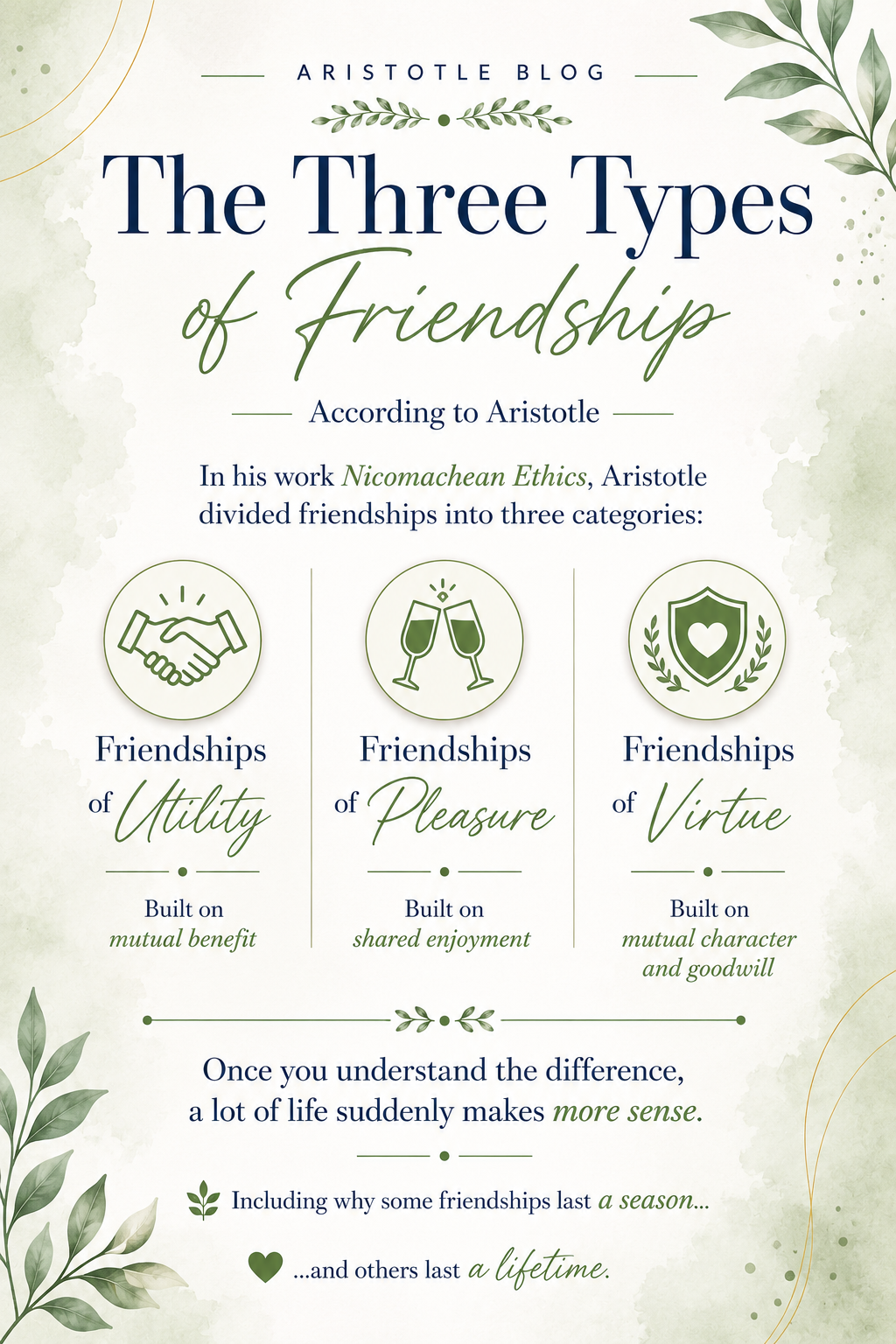
In his work Nicomachean Ethics, Aristotle divided friendships into three categories:
· Friendships of Utility
· Friendships of Pleasure
· Friendships of Virtue
Once you understand the difference, a lot of life suddenly makes more sense.
Including why some friendships last a season and others last a lifetime.
The Friendship of Utility
These friendships exist because both people benefit in some way.
· A business relationship
· A professional contact
· A neighbor who waters your plants while you’re away
· A parent from your child’s school
· A colleague who helps make work easier

There is nothing wrong with these friendships. In fact, our communities and businesses depend on them.
The mistake comes when we expect them to become something they were never designed to be.
Many relationships are built around circumstances.
When the job changes, the project ends, the kids graduate, or one person moves away, the connection often fades.
Not because anyone failed.
Not because anyone was dishonest.
The purpose simply changed.
Some friendships are like sippy cups.
They serve a purpose for a season. They are useful, convenient, and sometimes exactly what you need at the time.
But they are not meant to last forever.
At some point, you outgrow them.
And that doesn’t make them bad.
It simply means they were built for convenience, not permanence.
The Friendship of Pleasure
These are the people who make life fun.
· The golf buddy
· The travel companion
· The teammate
· The dinner group
· The concert friend
· The person who shares your favorite hobby

These friendships bring joy, laughter, and wonderful memories.
But they are often connected to a shared activity rather than a shared mission.
As people grow, interests change. Schedules shift. Families expand. Life evolves.
The friendship may evolve too.
That doesn’t make it less meaningful.
It simply means it belonged to a particular chapter of life.
And some chapters are beautiful even if they aren’t permanent.
The Friendship of Virtue
This is Aristotle’s highest form of friendship.
And according to him, the rarest.
A friendship of virtue exists when two people genuinely want the best for one another for the other person’s own sake.

Not because they gain something.
Not because it’s convenient.
Not because it’s entertaining.
But because they care.
These friends:
· Celebrate your success without envy
· Tell you the truth with kindness
· Protect your reputation when you’re not in the room
· Encourage your growth
· Stay when life becomes difficult
They don’t keep score.
They don’t treat relationships like transactions.
They simply want good things for you.
And you want the same for them.
But virtue friends don’t just wish you well.
They actively want to see you happy, successful, healthy, and thriving.
They take the photo because they want you to remember the moment.
They introduce you to people who can help you.
They connect you with opportunities.
They open doors without needing credit.
They take action when they see a way to make your life easier.
Most importantly, they see you.
Not your title.
Not your follower count.
Not what you can do for them.
You.
They notice the details.
They check in.
They show up.
Their kindness feels effortless because it comes from genuine care.
Their hugs feel like energy, fresh ocean air, and daisies.
That isn’t networking.
That isn’t convenience.
That isn’t entertainment.
That’s love in motion.
Why This Matters Today
We live in a world that encourages us to collect connections.
Followers.
Friends.
Contacts.
Subscribers.
Likes.
But Aristotle would probably ask a different question:
Who would still be there if none of those things existed?
Who would answer the phone?
Who would tell you the truth?
Who would celebrate your success without making it about themselves?
Who would sit beside you when life gets hard?
Those are different questions.
And often they lead to different answers.
Not every friend is meant to fill every role.
Some people help us accomplish something.
Some people help us enjoy something.
And a precious few help us become something.
When we understand that, we stop measuring friendships by quantity and start appreciating them for what they truly are.
A Final Thought
As I’ve gotten older, I’ve become less interested in having the most friends and more interested in recognizing the extraordinary ones.
The genuine ones.
The people who celebrate your joys, carry your burdens, tell you the truth, and wish the very best for you simply because they care.
I am incredibly grateful for those friends.
But there is another part Aristotle would probably remind us of too -
To have those friends, we have to be that friend.
We have to show up.
We have to celebrate without envy.
We have to make the call, send the text, take the photo, open the door, tell the truth with kindness, and want good things for people even when there is nothing in it for us.
Virtue friendship is not something we collect.
It is something we practice.
Aristotle called them friendships of virtue.
I simply call them friends.
And if you’re lucky enough to have even a few,